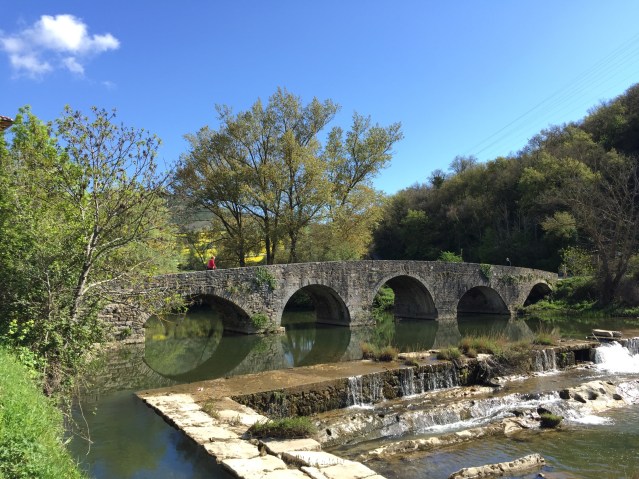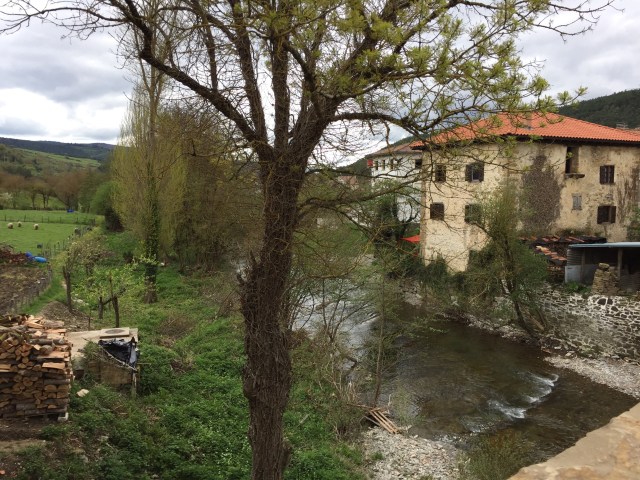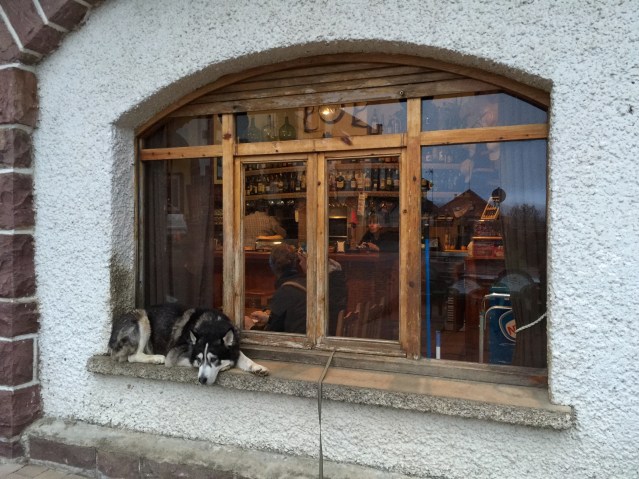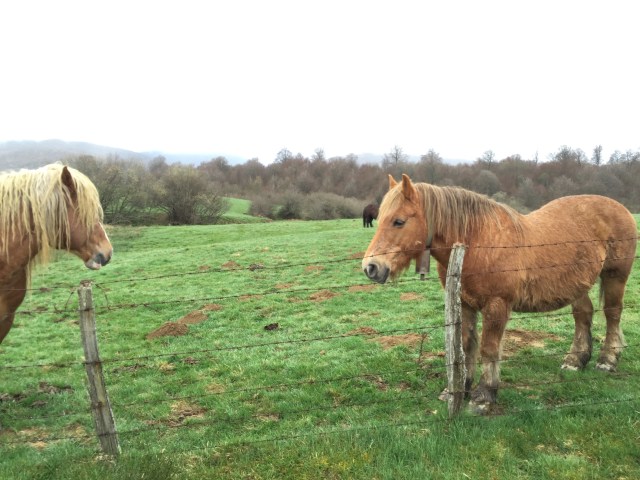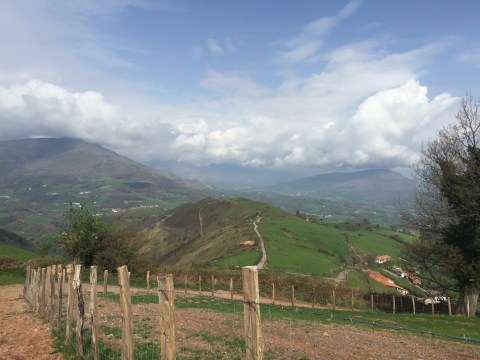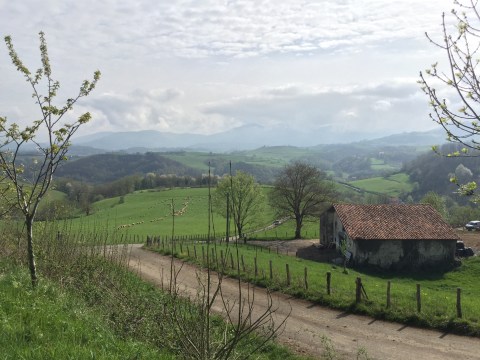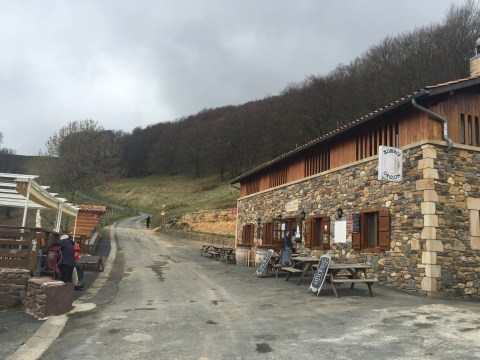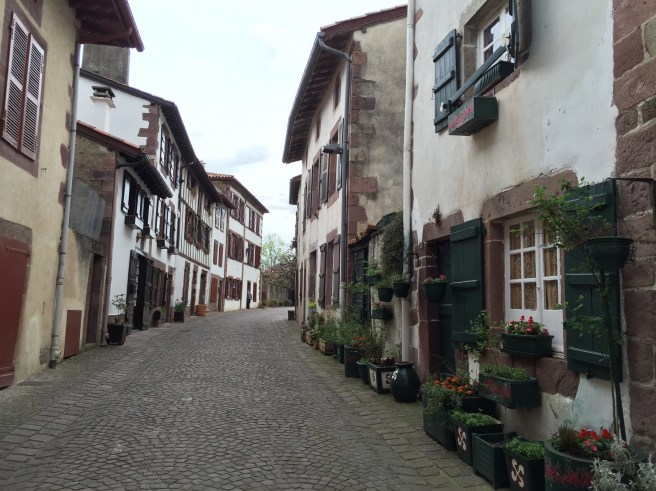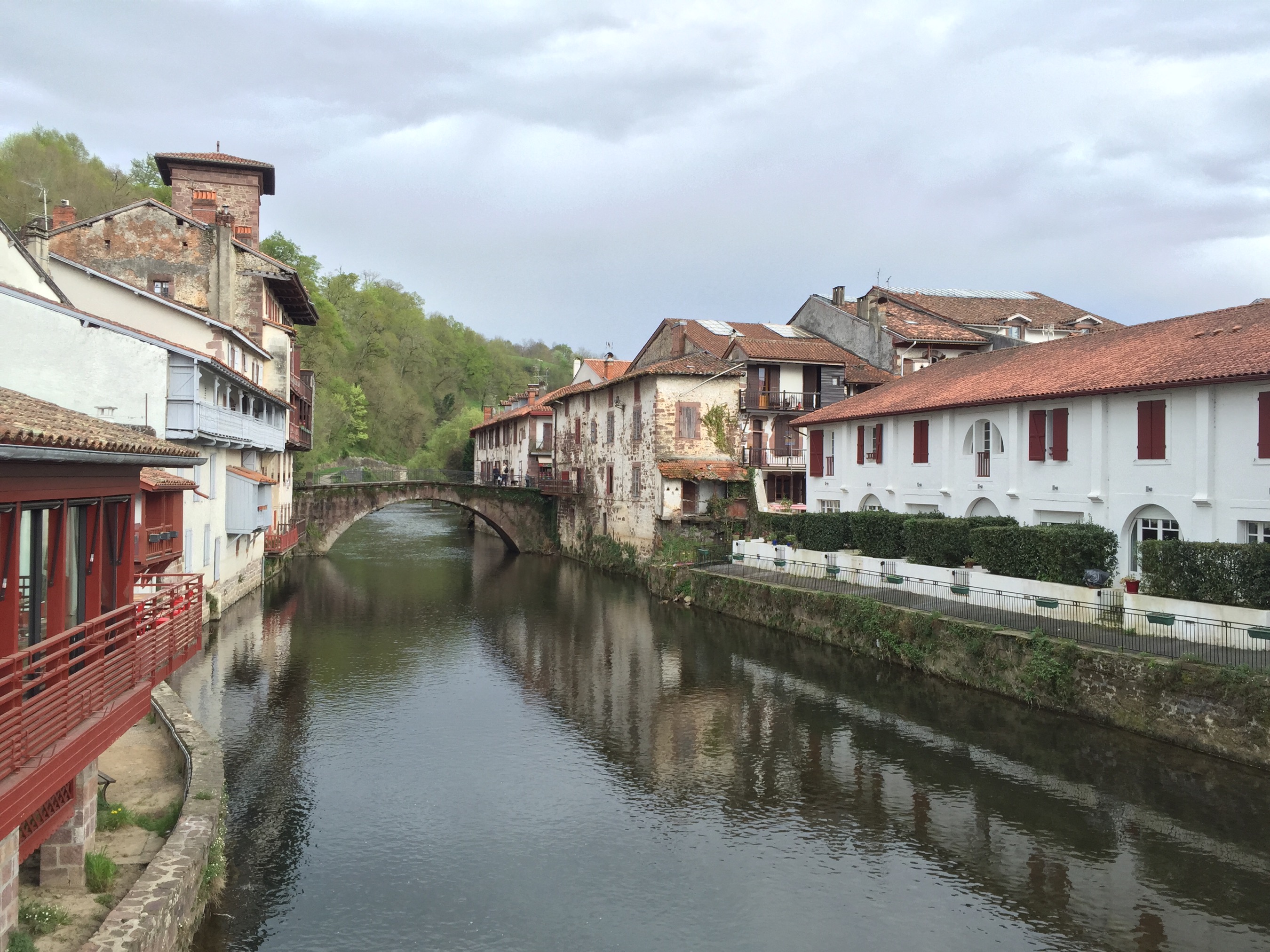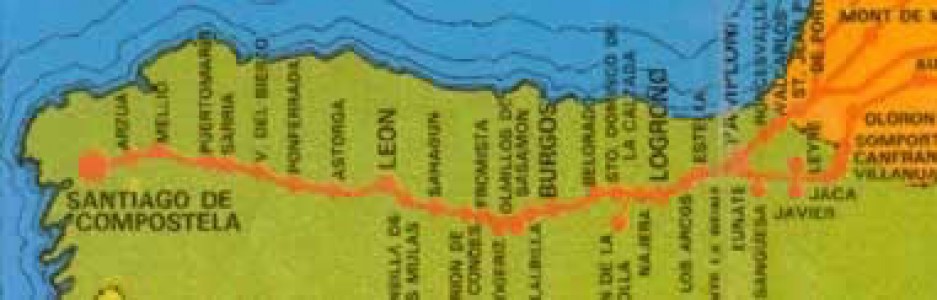
Puente la Reina, Navarre

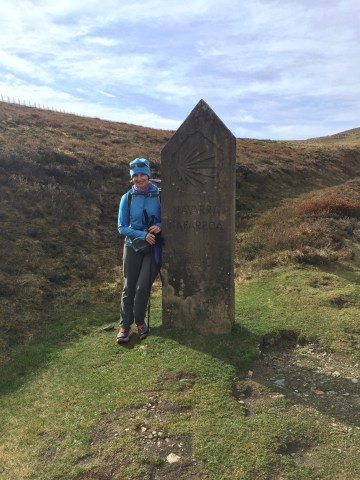
The Camino is well marked by the bright yellow scallop symbol, arrows and signs pretty much at every turn and crossroad.  Pretty much is the operative phrase here. Lost in thought or deep in conversation, it’s easy to look up and say  ¿Dónde está el Camino?

Helpful residents will often intercept the errant peregrino and point to the proper direction of the route. The good citizens of Pamplona had several opportunities to graciously show me how to get out of town today. Well it was early. 
local residents wave goodbye
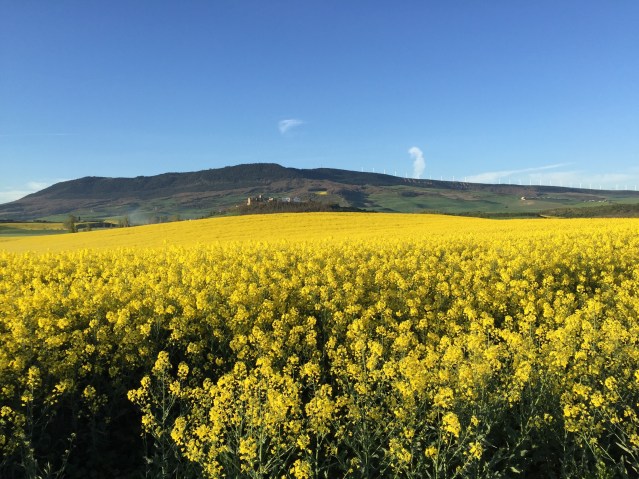
fields of canola in bloom

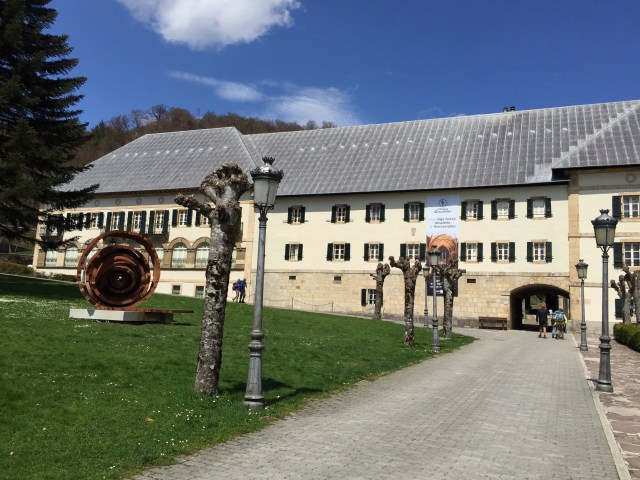
The path rose up and over the  Alto de Perdón  (Hill of Forgiveness). At the top is a beautiful iron sculpture depicting medevial pilgrims heading to Santiago and the set is entitled “Where the route of the wind crosses that of the stars”.  Isn’t that lovely? 
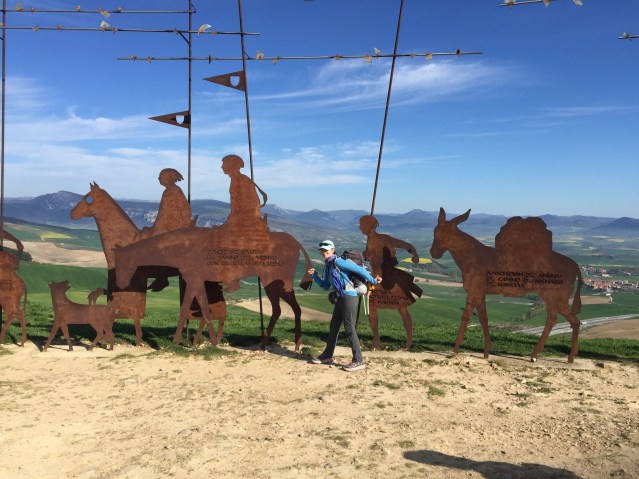
peregrinos.

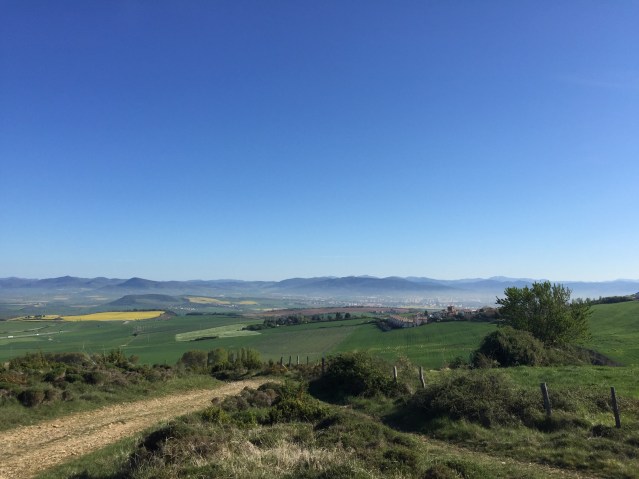
heading west

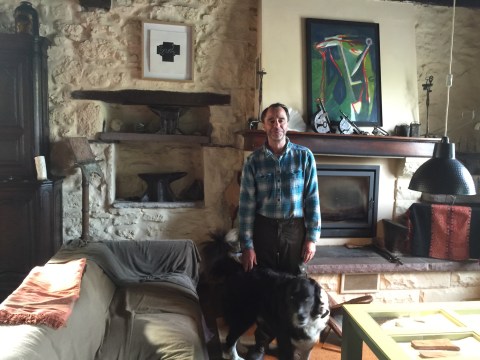
One of the highlights of today was crossing paths with a local guy out traing his gorgeous black lab. He spoke no English but somehow I managed to convey (I think) that his dog was beautiful and that I had one as well, a yellow one! back at home (ok, maybe all he understood was “Labrador”).

He gave me a big hug and kisses on both cheeks while wishing me the warmest Buen Camino I have been wished yet. Dog lovers speak a universal language I guess.
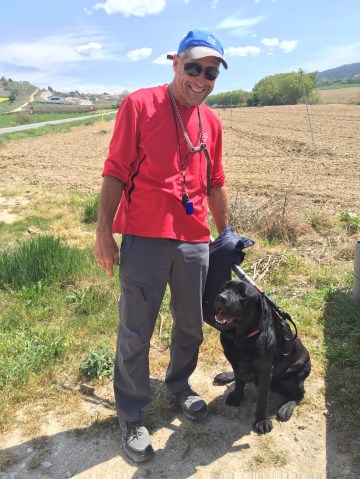
señor labrador

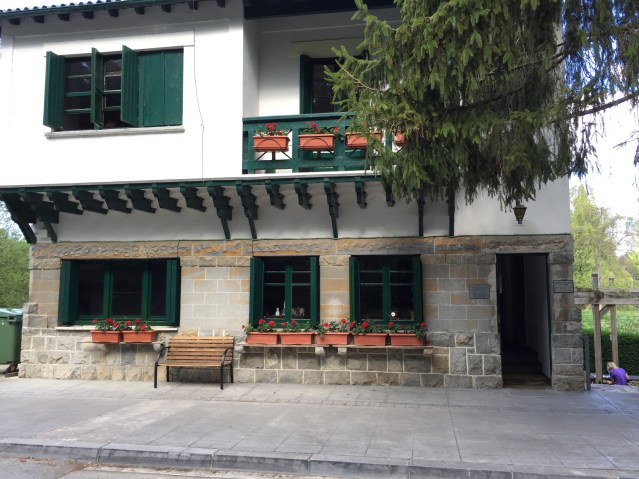
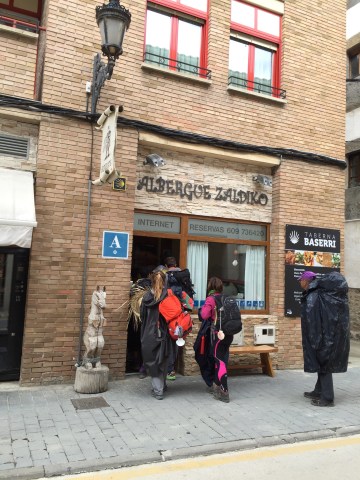
Staying tonight at the Albergue Puente. 12 euros incl breakfast. great place! I like this town a lot – and I didn’t see a bull head anywhere.
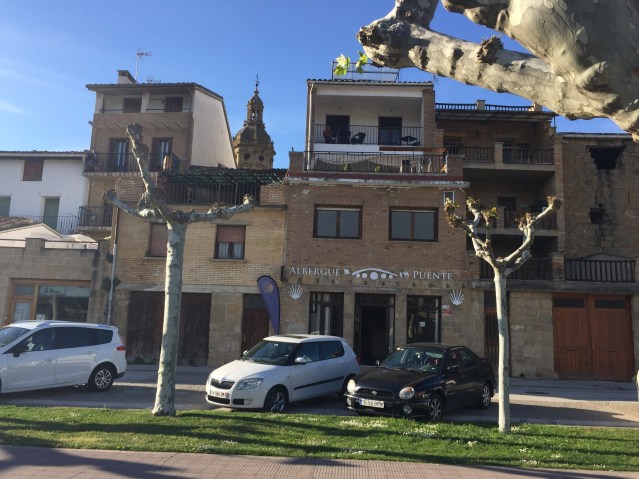
  

PS at the restaurant next to the albergue, I had a glass of  vino tinto a la casa. absolutely delicious and filled to the brim. 1.3 euros. The wine was cheaper than the coffee (1.5 euros).
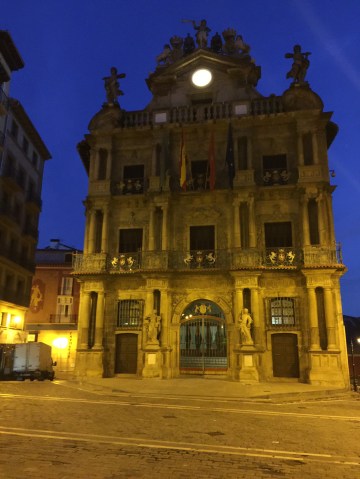
Pamplona, Navarre

Ok, it’s starting to make sense. Even though this part of Spain is divided between Spaniards and Basques, the locals refer to the Navarre Province as Basqueland (Pais Vasco) instead of Spain. The various guidebooks and signs all use some variation of the term “fiercely proud” which I think is actually code for “holds a grudge”.

What’s also dawning on me is just how early I’ll be out walking every day (I’ve been in denial). Headlamp on head, I was out on the path before 6:30am.  

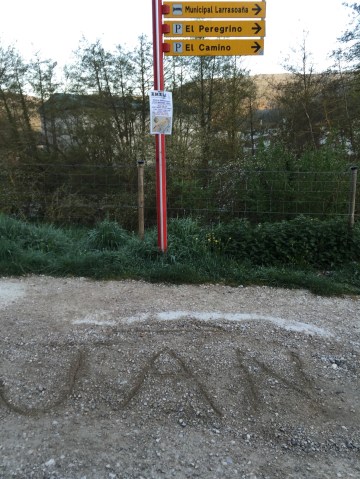
About an hour’s walk later I came upon a sign – 

it’s a sign

Yay! Cafe con leche time! 

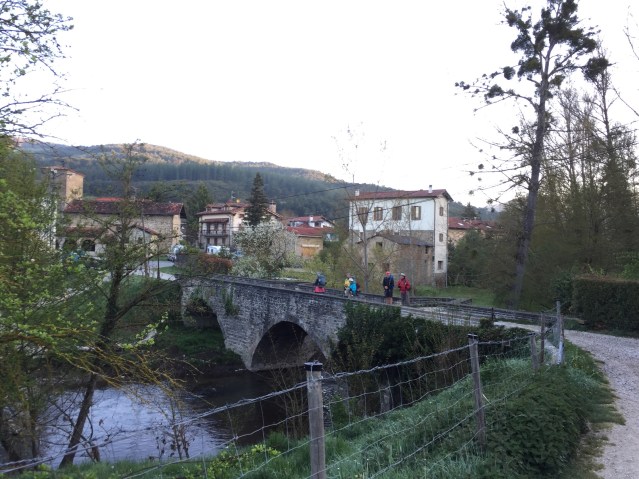
I have been walking on and off since Orisson with a lovely group of folks — Canadians and Australians. We had planned to meet for coffee and they didn’t want me to miss the turn.

Camino friends on the bridge

I met a couple of new people today and when I introduced myself they asked “are you Jan– Jan of the sign?” Yes.. I am Jan of the Sign!


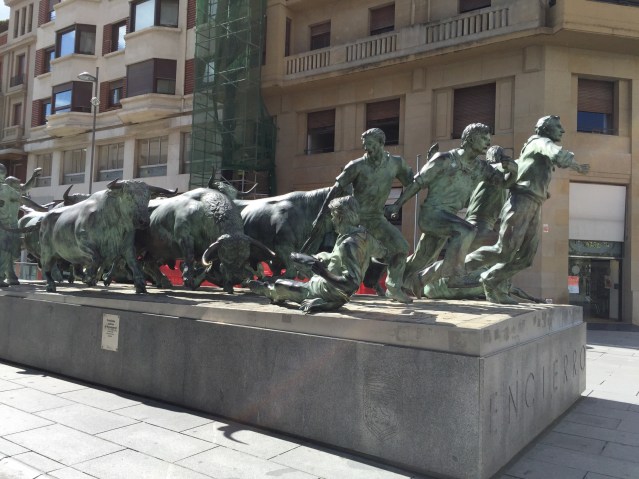
The trail left the countryside and took us into the city of Pamplona. It’s a beautiful city and the old part, with its narrow, winding alleys full of small shops and restaurants and ornate architecture, seems like a small version of Barcelona’s. But only if you overlook the Plaza de Toros – the enormous bull ring right in middle of the square and the bull heads & bull statues everywhere. That sort of thing doesn’t fly anymore in Catalonia.

guys getting gored


Staying tonight at a small German-run albergue. Efficient! Orderly! Spotless! And 8.50 euros includes breakfast.  

Casa Paderborn

Zubiri, Navarre

I can confirm the rumor that one rises early at the municipal albergues. This morning at 6am the lights snapped on along with a loud but beautiful recording of monks chanting. Monks chanting! – it was so unexpected it was kind of hard for even a non-early bird like me to do anything but smile.

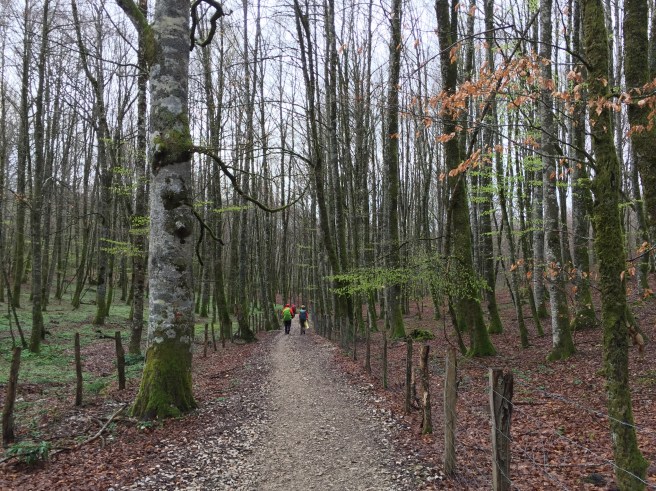
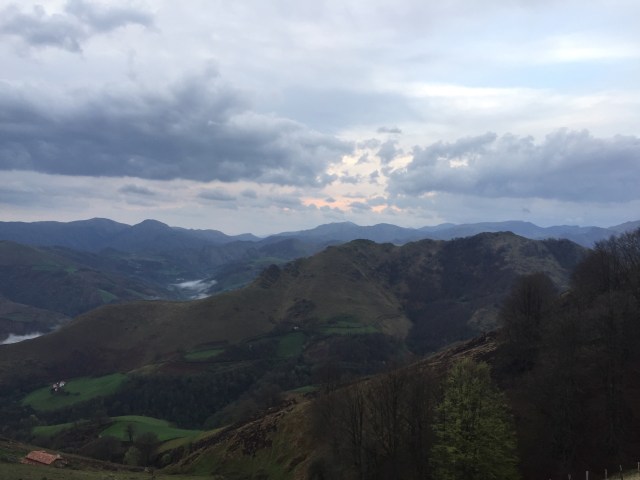
Another lovely walk. The path wove more downhill than up today through beech forests and winding valleys.


I can’t read Basque but i like his face


The route led over the Puente de la Rabia – a medieval bridge named for the legend that any animal led three times around the central arch would be cured of rabies. It is also the site of a former leprosarium. I find this kind of info endlessly fascinating and spent much time trying to visualize lepers walking rabid dogs.

cafe con leche stop. rabid animal?
a non-rabid animal. note his bell

Staying in  Zubiri tonight in a small private albergue. The price is 10 euros for a bunk, shower, breakfast. 

i checked in before the line and the raingear. whew

Roncevalles

Over the Pyrenees! Weather gods smiled again as, once more, the first drops of rain fell right after I checked into the albergue.

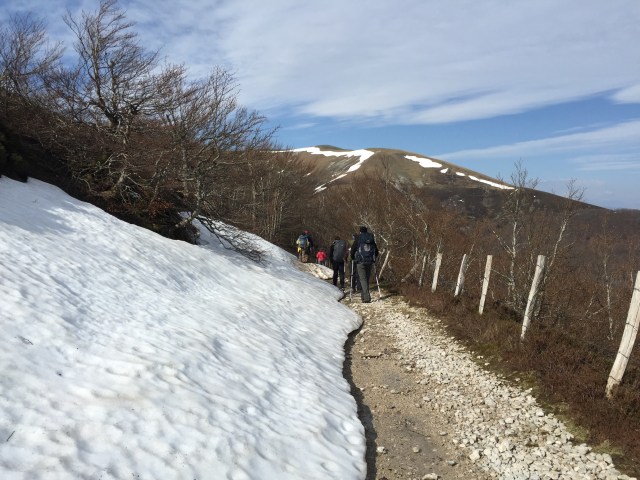
It was a magnificent day in every way: sweeping views; great weather (cool but not too cold); enough snow to be interesting but not block the path; even the occasional circling vulture sent, I’m sure, to see if any pilgrim has strayed from the path.


The path crossed into Spain today and I somewhat sadly bid an au revoir to France: my (very) limited French is much better than my (extremely) limited Spanish. In fact, I was complemented twice on my great French accent yesterday. All I ever seem to get from the Spanish is a blank stare.


Crossing into Navarra Province, Spain


The town of Roncesvalles actually has two other names in addition to this Spanish one — Orreaga (Basque) and Roncevaux (French) — and all signs seem to list all three. I was quite confused before I figured this out.


the municipal albergue – huge but great anyway


It’s not actually even a town (the resident population is 30) more like a series of adjoining medevial buildings, administered by the local church.  

Since the 12th century it has received “all pilgrims…sick and well, Catholics, Jews, pagans, heretics and vagabonds”.  I shall let you guess into which category I fall.

Orisson 

After 10 days of glorious sun while Nelson and I vacationed with his family in London and our friends in Barcelona, I woke to a downpour on the first day of my Camino. 

Luckily, I had already planned to only go as far as Orisson which is just part way up the mountains. Any urge I had felt last night to abandon this plan and do the whole pass quickly disappeared. 

So I waited out the weather for awhile even though that gave M Jean Francoise another opportunity to share his fatalistic bedbug expertise (delivered with very solemn sound effects, somewhat like slow-motion munching).  


M Jean Francoise

After a time the rain stopped, the clouds lifted and I started on my way. What a fantastic reward for waiting:  I had the pilgrim road to myself.


I’ve decided that in this part of France all farmers must be required to wear berets, have short, fat sheep and shaggy, friendly dogs or they aren’t allowed to farm. Their little farms are charming and with the springtime green everywhere, almost absurdly beautiful. 


Almost to the top, the clouds gathered and just as I thought I saw lightening flash, the Refugio Orisson came into view. I have a better understanding now of the term “refugio”.


If you decide to do the Camino I highly recommend staying a night here. Wonderful Basque dinner with 50+ other pilgrims from all over the world. Australians, Canadians, Japanese, South Americans, Koreans. Lots of Europeans of course including a young Italian couple on their honeymoon (!). Only two other Americans which I think isn’t typical.

St. Jean-Pied-de-Port, France

The medevial pilgrims traditionally stopped here before crossing the Pyrenees: the town name literally means St John at the Foot of the Pass.

It’s a beautiful walled city and I’m staying in a charming French inn. After my multi-course Basque dinner I wasn’t feeling very pilgrim like at all — actually more like a pampered tourist.

Well, I was until Monsieur Jean Francois, the proprietor of the Maison Donamaria, sat me down and gave me a stern, lengthy lecture on how to recognize bed bugs and then an equally impassioned lecture on how to properly puncture a blister.  yikes!

My Camino begins tomorrow and I’m trying not to itch in anticipation. 


Camino fears?

The other Camino advice is don’t pack your fears.

Mine: My feet aren’t going to feel like walking 500 miles; something will happen to my loved ones while I’m gone; a tsunami will hit Seattle; a strike will hit Spain; I’ll get hit by a bus; I’ll miss my train; I’ll miss Nelson too much; Yogi will forget me; my feet won’t feel like walking…

There – I’ve gotten that off my chest.

Packing list


One of the most offered pieces of Camino advice I’ve run across is to carry no more than 10% of your body weight in your pack. 


When I finally put all my carefully chosen items into my new lightweight Osprey pack I stepped on the scale and sadly noted the 18.4 pound weight, far more than the 11 or 12 lbs my small frame should carry.

And so the de-packing commenced. What to take and what to leave?? Which are the true essentials and which the luxuries? Nelson laughed as I pulled out the kitchen scale and set up a spreadsheet.

In the end, I compromised with a 15 pound pack and the knowledge that I’ll be able to buy pretty much anything I might need along the way. I need to remember that the Camino isn’t the PCT and Spain is a first world country – there will be plenty of pharmacias, cafes and supermercats. At least I hope so. 

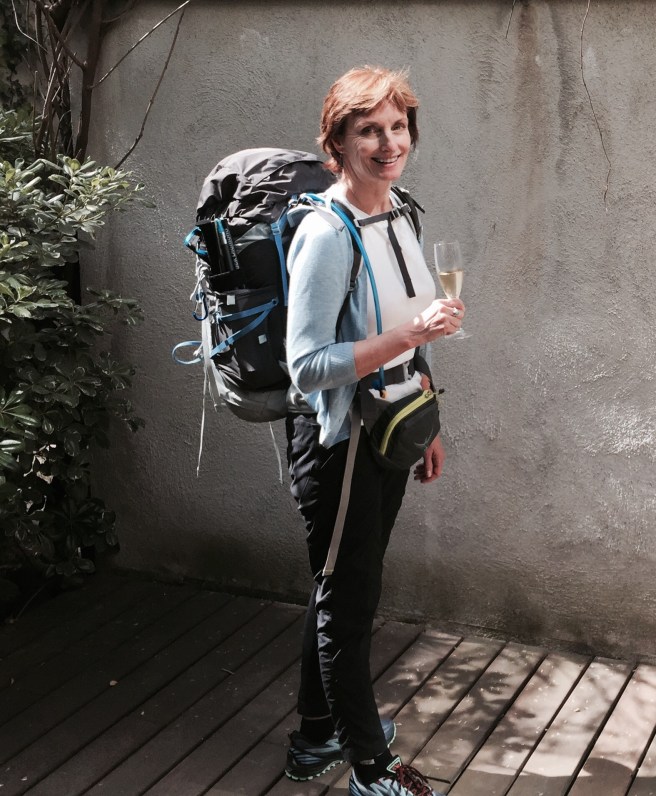
after lightening the load